
Trends in the Traditional Bicycle Industry: Classic Revival and Innovative Upgrade
Amid the rising awareness of green mobility and upgraded consumer demands, traditional bicycles have not been overshadowed by electric vehicles. Instead, they are regaining vitality through continuous innovation, securing a firm position in urban commuting, outdoor leisure, family interactions, and other scenarios. Blending classic charm with modern upgrades, the industry is moving toward lightweight, practicality, aesthetics, and sustainability.
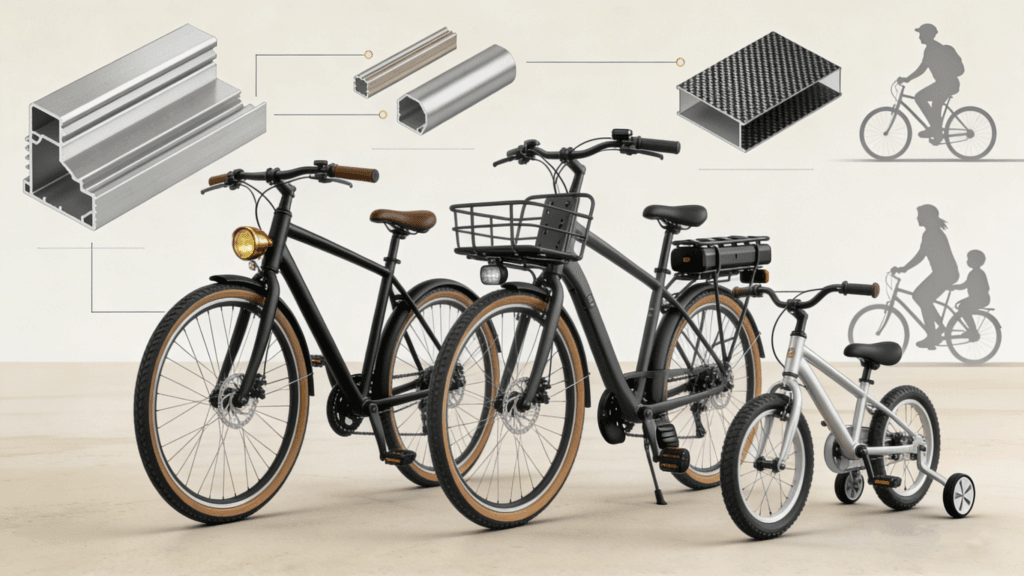
Lightweight material innovation reshapes the core riding experience. Aluminum alloy, with its balanced performance, accounts for 75% of traditional bicycle frames, becoming the mainstream choice. Advanced scandium alloy is 15% lighter than traditional aluminum while enhancing rigidity, enabling mid-range models to deliver premium riding quality. Carbon fiber accessories like forks have penetrated mid-range bikes with a 40% rate, effectively reducing riding fatigue. Meanwhile, steel-frame bicycles are experiencing a retro revival—aerospace-grade welding technology trims the weight of chromoly steel frames to 1.2kg, combining classic texture with modern practicality.
Functional integration meets urban commuting needs. Fenders, rear racks, and LED lights have become factory-installed standards, with some models adding USB charging ports and storage baskets. Internal 3-speed hubs, boasting a 5,000-kilometer maintenance-free cycle, simplify usage and lower costs. Hidden brake cables and quick-release designs enhance convenience and adaptability to diverse road conditions.
Design aesthetics drive consumption upgrades. Retro models with brass accessories and leather seats see a 28% year-on-year sales growth, while minimalist chainless shaft-driven bikes capture 15% of the high-end commuter market. Ergonomic frame optimization fits 85% of height ranges, reducing riding fatigue by 30%.
Scenario segmentation activates new growth engines. Children’s bikes under 20 inches adopt lightweight magnesium alloy wheels and puncture-resistant tires (90% penetration rate) for safety and ease of use. Family-oriented models like tandem bikes and parent-child trailers sell over one million units annually, with foldable designs saving 60% storage space.
Sustainability becomes an industry consensus. Eighty percent of brands use water-based paint, cutting VOC emissions by 70%. Recycled aluminum is widely applied, and the 92% recovery rate of scrapped frames supports a circular economy. Modular designs extend product lifecycles by enabling component replacement.
Blending classic charm with modern innovation, traditional bicycles continue to evolve into an indispensable part of green lifestyles, promising more surprises in the future.