

Steel vs Aluminum Bicycle Frames: Complete Sourcing Guide for Wholesale Importers
When sourcing bicycles from Chinese manufacturers, one of the first decisions a wholesale importer faces is frame material. The two dominant materials for mass-market export bicycles are high-tensile steel and aluminum alloy. Each material has distinct advantages in strength, weight, cost, ride comfort and market suitability.
Choosing the wrong frame material for your target market can lead to slow-moving inventory, high after-sales costs and lost retail margin. This guide breaks down the key differences and helps B2B buyers make informed sourcing decisions.
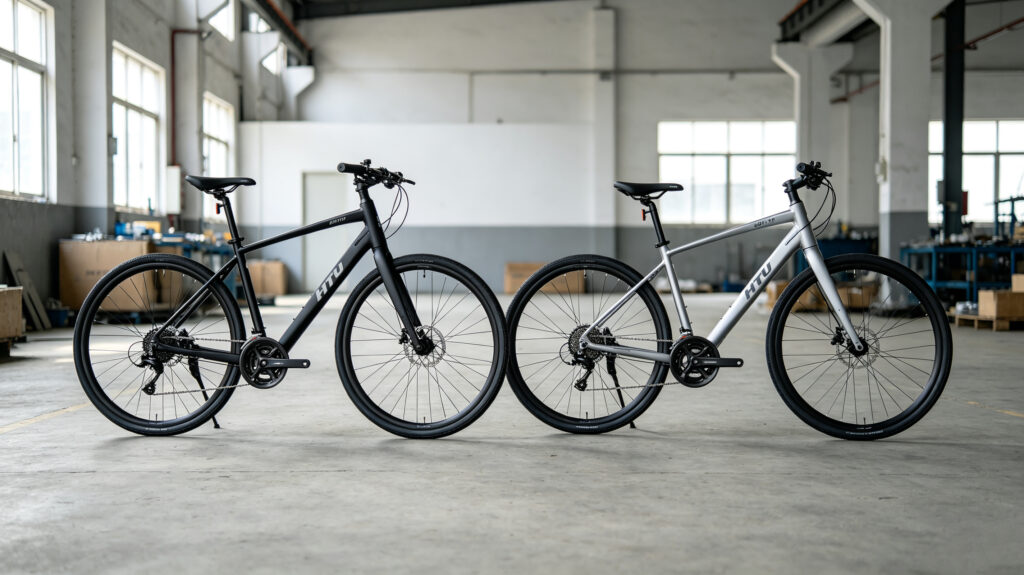
1. High-Tensile Steel Frames: The Backbone of Mass-Market Export Bicycles
High-tensile carbon steel remains the most widely used frame material for export bicycles worldwide, especially in Southeast Asia, South America, Africa and the Middle East.
1.1 Core Advantages of Steel Frames
Superior Strength and Impact Resistance Steel frames offer excellent tensile strength and toughness. They absorb impacts from potholes, gravel roads and rough terrain better than entry-level aluminum frames, making them ideal for markets with poor road infrastructure.
Lower Production Cost Steel tubing is significantly cheaper than aluminum alloy. This directly reduces the unit cost of complete bicycles, allowing wholesalers to offer competitive retail prices in price-sensitive markets.
Easy Repair and Maintenance Steel frames can be welded and repaired locally in almost any market. This is a critical advantage in regions where professional bike repair shops are limited and end-users rely on local welders for frame fixes.
Comfortable Ride Quality Steel naturally dampens road vibration, delivering a smoother and more comfortable ride on rough surfaces. This makes steel frames popular for city commuter bikes and entry-level mountain bikes.
1.2 Limitations of Steel Frames
Heavier Weight Steel is denser than aluminum, so steel frames are typically 15–25% heavier than comparable aluminum frames. This is less of a concern for budget commuter and kids bikes, but matters for performance-oriented models.
Rust Risk Without Proper Treatment Raw steel is susceptible to corrosion. However, modern export bicycles use electrophoresis (ED) coating + multi-layer spray painting to create a dense anti-rust barrier. When properly treated, steel frames can withstand years of use in humid and coastal climates.
1.3 Best Markets for Steel-Frame Bicycles
- Southeast Asia: city commuter bikes, kids bikes, entry-level mountain bikes
- South America: heavy-duty mountain bikes, youth bikes, utility bikes
- Africa and Middle East: durable utility and commuter bicycles
- Price-sensitive markets where repair accessibility matters
2. Aluminum Alloy Frames: The Choice for Mid-to-High-End Export Bicycles
Aluminum alloy frames (commonly 6061-T6) dominate the mid-to-high-end bicycle segment, especially in Europe, North America and Oceania.
2.1 Core Advantages of Aluminum Frames
Lightweight Aluminum is roughly one-third the density of steel. An aluminum frame can be 20–30% lighter than a steel frame of equivalent size, making the complete bicycle easier to ride, carry and transport. Lower weight also reduces international shipping costs per container.
Natural Corrosion Resistance Aluminum forms a protective oxide layer naturally, making it inherently rust-resistant without complex coating processes. This is a strong selling point in coastal and high-humidity regions.
Modern Aesthetic Appeal Aluminum frames allow for hydroforming and butted tube designs, creating sleek, modern frame shapes with tapered head tubes, integrated cable routing and aerodynamic profiles. This appeals to style-conscious consumers in developed markets.
Responsive Ride Feel Aluminum is stiffer than steel, delivering more direct power transfer. This makes aluminum frames preferred for road bikes, fitness bikes and mid-range mountain bikes where efficiency matters.
2.2 Limitations of Aluminum Frames
Higher Cost Aluminum tubing and welding require more specialized production processes, increasing frame cost by 30–50% compared to steel. This raises the complete bicycle price and may limit market reach in budget segments.
More Complex Repair Aluminum welding requires specialized equipment and skilled technicians. In many emerging markets, local repair shops cannot properly fix aluminum frames, meaning a damaged frame often means a total replacement.
Harsher Ride on Rough Roads The stiffness that makes aluminum efficient also transmits more road vibration. On poorly maintained roads, aluminum frames can feel harsher compared to the natural damping of steel.
2.3 Best Markets for Aluminum-Frame Bicycles
- Europe: road bikes, fitness bikes, urban commuter bikes, premium kids bikes
- North America and Oceania: mid-to-high-range mountain bikes, hybrid bikes
- Markets where consumers prioritize lightweight and modern design over lowest price
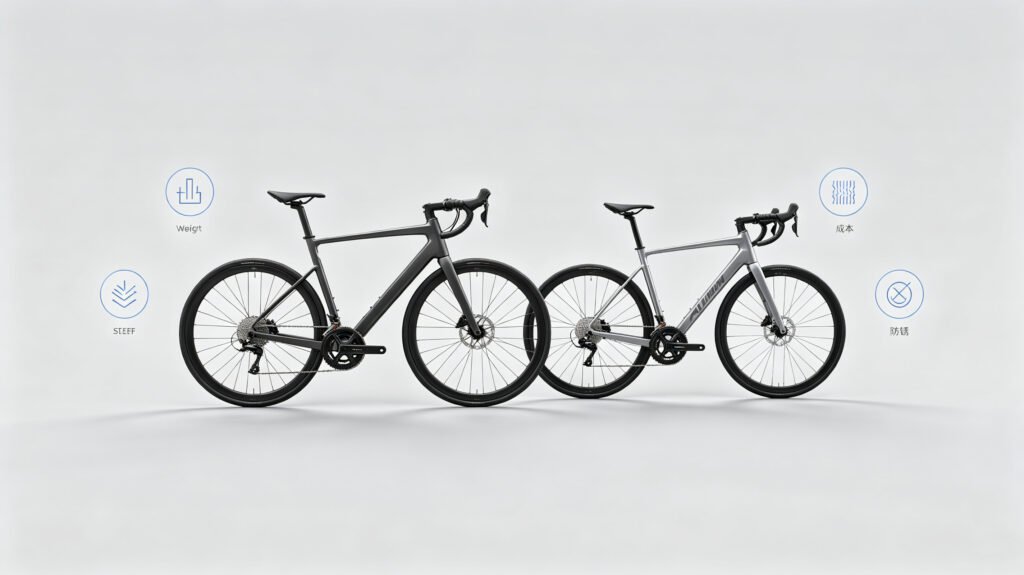
3. Head-to-Head Comparison: Steel vs Aluminum
表格
| Comparison Factor | High-Tensile Steel | Aluminum Alloy (6061-T6) |
|---|---|---|
| Weight | Heavier (baseline) | 20–30% lighter |
| Strength & Toughness | Excellent impact resistance | Good strength, less dent tolerance |
| Cost | Lower (baseline) | 30–50% higher frame cost |
| Rust Resistance | Requires ED coating + painting | Naturally corrosion-resistant |
| Ride Comfort | Smooth, vibration-damping | Stiffer, more direct |
| Repairability | Easy, local welding possible | Requires specialized repair |
| Design Flexibility | Traditional tube shapes | Hydroforming, modern aero shapes |
| Best For | Budget, utility, rough-road markets | Mid-to-high-end, lightweight, developed markets |
4. How to Choose the Right Frame Material for Your Market
4.1 Consider Your Target Consumer Profile
If your customers are budget-conscious daily commuters, families buying kids bikes, or riders in regions with poor roads, steel frames offer the best balance of durability, cost and repairability.
If your customers are fitness riders, urban professionals, or consumers in developed markets who value lightweight and modern design, aluminum frames are the stronger choice.
4.2 Evaluate Local Road Infrastructure
- Rough gravel, dirt roads and potholed city streets → steel frames absorb impact better
- Well-paved urban roads and dedicated cycling lanes → aluminum frames deliver efficiency and comfort
4.3 Calculate Retail Price Positioning
Steel-frame bicycles typically retail at entry to mid price points, with healthy margins for wholesalers due to lower production cost. Aluminum-frame bicycles target mid-to-premium price points, with higher per-unit margin but smaller volume in price-sensitive markets.
4.4 Assess After-Sales and Repair Ecosystem
In markets where local repair infrastructure is basic, steel frames’ easy repairability significantly reduces warranty claims and customer dissatisfaction. In markets with professional bike shops, aluminum repair is less of a concern.
5. OEM Customization: Frame Material as a Brand Differentiator
Professional bicycle OEM factories can produce both steel and aluminum frames, allowing wholesalers to build a differentiated product portfolio.
Steel Frame Customization Options:
- Custom tube wall thickness for heavy-duty or lightweight applications
- ED coating + custom paint colors and decals
- Reinforced welding at stress points for rough-road markets
- Custom frame geometry for specific riding positions
Aluminum Frame Customization Options:
- 6061-T6 alloy tubing with butted or hydroformed tubes
- Integrated cable routing and tapered head tubes
- Custom anodized or painted finishes
- Performance-oriented geometry for road and fitness models
As a specialized bicycle OEM manufacturer, we produce both high-tensile steel and aluminum alloy frames for global export. Our in-house frame production, ED coating line and multi-stage painting process ensure consistent quality across both material types. We support wholesalers in building market-specific product lines — from budget steel commuter bikes to premium aluminum performance models — with flexible MOQ, custom branding and complete export documentation.
6. Common Misconceptions
Myth: Steel frames always rust. Fact: Modern export bicycles with ED coating and multi-layer painting offer excellent rust protection. Properly treated steel frames last for years in humid climates.
Myth: Aluminum frames are always better. Fact: Aluminum is lighter and rust-resistant, but steel offers better impact resistance, lower cost and easier repair. The “better” material depends entirely on your target market.
Myth: Steel bikes are low quality. Fact: High-tensile steel is a proven, durable material used in bicycles worldwide. Quality depends on tube grade, welding standard and coating process — not the material alone.
FAQ
Q1: Which frame material is more popular for export bicycles?
A: High-tensile steel dominates global export volume, especially in emerging markets. Aluminum alloy leads in mid-to-high-end segments targeting Europe and North America.
Q2: Can a factory produce both steel and aluminum frames?
A: Yes. Professional OEM manufacturers with in-house frame production can produce both materials, allowing wholesalers to offer a complete product range.
Q3: Which material has lower after-sales cost?
A: Steel frames generally have lower after-sales cost in emerging markets because they are easier to repair locally and more resistant to impact damage.
Q4: Does frame material affect shipping cost?
A: Yes. Aluminum frames are lighter, reducing the weight per container and potentially lowering freight costs. However, this must be balanced against the higher unit production cost of aluminum.
Q5: Can I mix steel and aluminum models in one container?
A: Yes. Most OEM factories support mixed-container orders, allowing wholesalers to test both material categories in a single shipment.
Q6: What is the typical price difference between steel and aluminum complete bikes?
A: For comparable specifications, aluminum complete bicycles are typically 25–40% more expensive than steel models, depending on frame grade and component configuration.
钢车架 vs 铝车架:自行车批发商采购完整指南
从中国工厂采购自行车时,进口商面临的第一个核心决策就是车架材质。全球出口自行车的两大主流材质是高拉力碳钢和铝合金。两种材质在强度、重量、成本、骑行舒适度和市场适配性上各有明显差异。
选错车架材质可能导致库存滞销、售后成本高企、零售利润受损。本文系统拆解两者差异,帮助 B 端采购做出科学决策。
一、高拉力碳钢车架:大众出口市场的主力
高拉力碳钢是全球出口自行车使用最广泛的车架材质,尤其在东南亚、南美、非洲和中东市场占据主导。
碳钢车架核心优势
- 强度高、抗冲击:碳钢韧性好,能更好地吸收坑洼、砂石路面的冲击,适合道路基础设施较差的市场。
- 生产成本低:碳钢管材价格远低于铝合金,直接降低整车成本,帮助批发商在价格敏感市场保持竞争力。
- 易维修:碳钢车架几乎在任何市场都能通过本地焊接修复,这在专业车店有限的地区至关重要。
- 骑行舒适:碳钢天然过滤路面震动,在粗糙路面上骑行更平稳,适合城市通勤车和入门山地车。
碳钢车架局限
- 重量较大:比同尺寸铝车架重 15–25%,对预算通勤车和童车影响不大,但对性能车型有影响。
- 需做好防锈处理:未经处理的碳钢易腐蚀。现代出口自行车采用电泳底漆 + 多层喷漆工艺,形成致密防锈层,可在潮湿沿海地区长期使用。
碳钢车架最佳适配市场
东南亚(通勤车、童车、入门山地车)、南美(重型山地车、青少年车、实用车)、非洲和中东(耐用实用型自行车)、价格敏感且维修便利性重要的市场。
二、铝合金车架:中高端出口市场的首选
铝合金车架(常用 6061-T6)主导中高端自行车市场,尤其在欧洲、北美和大洋洲。
铝合金车架核心优势
- 轻量化:铝密度约为钢的三分之一,铝车架比同尺寸钢车架轻 20–30%,整车更易骑行、搬运和运输,同时降低单柜海运成本。
- 天然防锈:铝表面自然形成氧化保护层,无需复杂涂层工艺即可防锈,是沿海高湿地区的强卖点。
- 现代外观:铝合金支持液压成型和抽管工艺,可打造锥形头管、内走线、气动造型等现代设计,吸引发达市场注重外观的消费者。
- 骑行效率高:铝比钢更硬,力量传递更直接,适合公路车、健身车和中端山地车。
铝合金车架局限
- 成本较高:铝管材和焊接需要更专业的生产工艺,车架成本比钢高 30–50%,推高整车售价,在预算市场覆盖面有限。
- 维修复杂:铝焊接需要专业设备和技术人员,许多新兴市场本地车店无法修复铝车架,损坏往往意味着整体更换。
- 粗糙路面骑行偏硬:铝的高刚性在带来效率的同时也传递更多路面震动,在维护不良的道路上骑行感比钢更颠簸。
铝合金车架最佳适配市场
欧洲(公路车、健身车、城市通勤车、高端童车)、北美和大洋洲(中高端山地车、混合动力车)、消费者优先考虑轻量化和现代设计而非最低价的市场。
三、钢 vs 铝 核心对比
表格
| 对比维度 | 高拉力碳钢 | 铝合金(6061-T6) |
|---|---|---|
| 重量 | 较重(基准) | 轻 20–30% |
| 强度韧性 | 抗冲击优秀 | 强度好,耐凹陷稍弱 |
| 成本 | 较低(基准) | 车架成本高 30–50% |
| 防锈 | 需电泳 + 喷漆 | 天然防锈 |
| 骑行舒适 | 平稳、吸震 | 偏硬、直接 |
| 可维修性 | 简单,本地可焊 | 需专业维修 |
| 设计灵活性 | 传统管型 | 液压成型、气动造型 |
| 最佳适配 | 预算、实用、路况差市场 | 中高端、轻量化、发达市场 |
四、如何为目标市场选择合适的车架材质
- 看目标消费群体:预算型日常通勤者、购买童车的家庭、路况差地区的骑行者 → 碳钢;健身骑行者、城市白领、发达市场注重轻量化和设计的消费者 → 铝合金。
- 看当地道路基础设施:砂石路、土路、坑洼街道 → 碳钢吸震更好;铺装良好的城市道路和专用自行车道 → 铝合金效率和舒适度更佳。
- 看零售价格定位:碳钢整车通常定位入门到中端,因生产成本低,批发商利润空间健康;铝合金整车定位中端到高端,单台利润更高但在价格敏感市场销量较小。
- 看售后维修生态:维修基础设施薄弱的市场,碳钢易维修的特性能显著降低质保索赔和客户不满;有专业车店的市场,铝维修不是问题。
五、OEM 定制:用车架材质打造品牌差异化
专业自行车 OEM 工厂可同时生产碳钢和铝车架,帮助批发商构建差异化产品矩阵。
碳钢车架定制选项:
- 定制管壁厚度(重型或轻量化应用)
- 电泳底漆 + 定制喷漆颜色和贴花
- 应力点加强焊接(适配粗糙路况市场)
- 定制车架几何
铝合金车架定制选项:
- 6061-T6 合金抽管或液压成型管材
- 内走线、锥形头管
- 定制阳极氧化或喷漆表面
- 性能导向几何(公路、健身车型)
作为专业自行车 OEM 制造商,我们同时生产高拉力碳钢和铝合金车架,面向全球出口。自有车架生产线、电泳涂装线和多阶段喷漆工艺,确保两种材质的品质一致性。我们支持批发商构建市场专属产品线 —— 从预算型钢制通勤车到高端铝制性能车型 —— 提供灵活起订量、定制品牌和全套出口文件。
六、常见误区
- 误区:钢车架一定会生锈。 事实:采用电泳底漆和多层喷漆的现代出口自行车防锈性能优秀,妥善处理的钢车架在潮湿气候下可使用多年。
- 误区:铝车架一定更好。 事实:铝更轻、防锈,但钢抗冲击更好、成本更低、维修更易。”更好” 的材质完全取决于目标市场。
- 误区:钢自行车就是低质量。 事实:高拉力碳钢是全球自行车广泛使用的成熟耐用材料,品质取决于管材等级、焊接标准和涂层工艺,而非材质本身。
FAQ 常见问答
Q1:出口自行车哪种车架材质更主流? A:高拉力碳钢在全球出口量中占主导,尤其在新兴市场;铝合金在面向欧洲和北美的中高端市场领先。
Q2:工厂可以同时生产钢和铝车架吗? A:可以。拥有自有车架生产线的专业 OEM 工厂能同时生产两种材质,帮助批发商提供完整产品组合。
Q3:哪种材质售后成本更低? A:在新兴市场,碳钢车架售后成本通常更低,因为本地维修方便且抗冲击性更强。
Q4:车架材质影响海运成本吗? A:是的。铝车架更轻,降低单柜重量,可能降低运费。但需与铝更高的单位生产成本综合权衡。
Q5:可以一个柜子混装钢和铝车型吗? A:可以。大多数 OEM 工厂支持混柜订单,批发商可在一次发货中测试两种材质品类。
Q6:钢和铝整车价格通常差多少? A:配置相近时,铝合金整车通常比钢制车型贵 25–40%,具体取决于车架等级和配件配置。